 Naneedigital
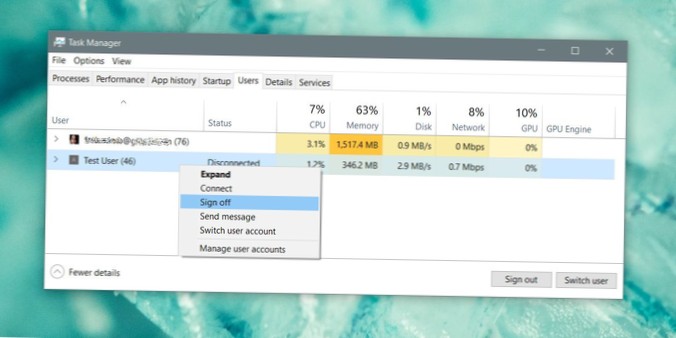
Open up Task Manager by pressing Ctrl+Shift+Esc, then click the “Users” tab at the top of the window. Select the user you want to sign out, and then click “Sign Out” at the bottom of the window.
- How do I remove a user account from Windows 10?
- How do I log someone out of my computer?
- How do I sign out of Windows 10 as administrator?
- How do I sign out of Windows 10 without shutting down?
How do I remove a user account from Windows 10?
- Press Windows key, click on Settings.
- Click on Account, click on Family and other users.
- Select the user you want to delete under Other users and click on Remove.
- Accept the UAC (User Account Control) prompt.
- Select Delete account and data if you wish to delete account and the data and follow onscreen instructions.
How do I log someone out of my computer?
Alternatively, on Windows, press "Ctrl-Alt-Del" and select "Log off." On a Mac, press "Shift-Command-Q."
How do I sign out of Windows 10 as administrator?
Open the folder for Users, and double-click the Administrator account. Uncheck the option for Account Is Disabled, and click OK or Apply (Figure C). Close the User Management window. With the account enabled, log out.
How do I sign out of Windows 10 without shutting down?
Simply hit Ctrl-Alt-Del and then select Sign Out; or Switch User as one other person asked. Another option is to use the combination of Windows Key + L, which will lock the account and then you can either log back in or switch to another user on the machine.
![Delete Key Not Working On MacBook [Windows On Mac]](https://naneedigital.com/storage/img/images_1/delete_key_not_working_on_macbook_windows_on_mac.png)