 Naneedigital
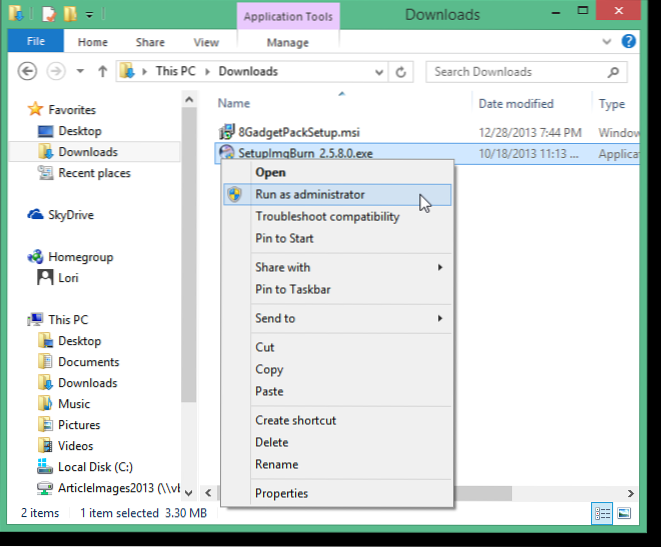
How to install MSI from command line with administrator
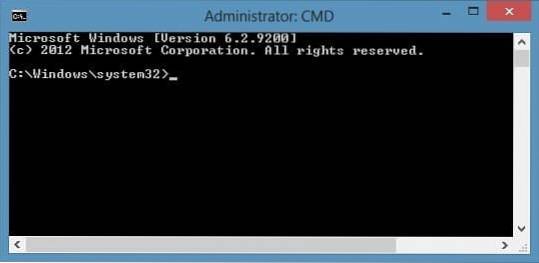
- Right click on Windows Start , choose Command Prompt (Admin)
- In the command prompt, input. msiexec /i “path\setup.msi“
- Press Enter to start the install process.
- How do I install an MSI file as administrator?
- How do I run an MSI file as administrator in Windows 10?
- What is installation administration?
- How do I install a file as administrator?
- What is MSI file format?
- How do you run as administrator?
- Does MSI require admin rights?
- How do I run MSI as another user?
- How do I silent install MSI?
How do I install an MSI file as administrator?
msi file as an administrator by running the command prompt (cmd) as an administrator and executing the . msi file from the command line. Use the "Search Program and Files" to get the cmd.exe option and right-click it to run it as an administrator. Now you will be able to run any .
How do I run an MSI file as administrator in Windows 10?
To do so, type CMD in Start menu or Start screen search box, and then simultaneously press Ctrl+Shift+Enter keys. Alternatively, in Windows 7 and Windows 10, you can navigate to Start menu, All programs and Accessories. And then right-click on the Command Prompt and click Run as administrator.
What is installation administration?
An administrative installation installs a source image of the application onto the network that is similar to a source image on a CD-ROM. ... The user can choose to run-from-source when he installs and the installer uses most of the product's file directly from the network.
How do I install a file as administrator?
Please follow the instructions below:
- From Start Menu, find your desired program. Right-click and select Open File Location. Open file location from start menu.
- Right-click the program and go to Properties –> Shortcut.
- Go to Advanced.
- Check Run as Administrator checkbox. Run as administrator option for program.
What is MSI file format?
MSI is a file extension that applies to database files used by the Microsoft Windows Installer (MSI). They contain information about an application divided into features and components, and every component may contain files, registry data, shortcuts, and so on.
How do you run as administrator?
- Right-click the desktop icon of the application (or the executable file in the installation directory) and select Properties. - Select the Compatibility tab. - Click Change settings for all users. - Under Privilege Level, check Run this program as administrator.
Does MSI require admin rights?
msi format, which is the standard format for Windows Installer Server. Because system resources access are required for software to function, they require system admin privileges during installation. ... You must acquire system administrator privileges before installing the software.
How do I run MSI as another user?
To “Run as different user” using Context Menu
- RMB click on any BAT, CMD, EXE, MSC, or MSI file, and choose Run as a different user.
- Now you should enter users User name and Password and press ok.
- When you will have UAC pop up just press yes.
- Now an app will be running as a new user.
How do I silent install MSI?
You should be able to use the /quiet or /qn options with msiexec to perform a silent install. MSI packages export public properties, which you can set with the PROPERTY=value syntax on the end of the msiexec parameters. You can read the options for msiexec by just running it with no options from Start -> Run.