 Naneedigital
- How do I install Python 3 on Mac?
- How do I enable Python 3 on Mac?
- How do I uninstall Python 2.7 and install Python 3 on Mac?
- How do I get Python 3?
- Where does Python get installed on Mac?
- Is Python 3 installed on Mac?
- How do I update Python 3 on Mac terminal?
- Is Python installed on Mac?
- Which Python version is best?
- How do I run Python on Mac?
How do I install Python 3 on Mac?
There are two ways of installing python3 on a mac system:
- Use the Homebrew package manager. After installing Homebrew install Python 3 by running brew install python3.
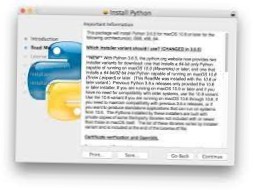
- Download and install the latest stable Python 3 package. Be sure to run the included Install Certificates command from Finder.
How do I enable Python 3 on Mac?
Open the terminal (bash or zsh) whatever shell you are using. Install python-3 using Homebrew (https://brew.sh). Look where it is installed. Change the default python symlink to the version you want to use from above.
How do I uninstall Python 2.7 and install Python 3 on Mac?
Basically, all you need to do is the following:
- Remove the third-party Python 2.7 framework sudo rm -rf /Library/Frameworks/Python.framework/Versions/2.7.
- Remove the Python 2.7 applications directory sudo rm -rf "/Applications/Python 2.7"
- Remove the symbolic links, in /usr/local/bin , that point to this Python version.
How do I get Python 3?
Open a browser window and navigate to the Python.org Downloads page for Windows. Under the “Python Releases for Windows” heading, click the link for the Latest Python 3 Release - Python 3.
Where does Python get installed on Mac?
- First search for PYTHON IDLE from search bar.
- Open the IDLE and use below commands. import sys print(sys.path)
- It will give you the path where the python.exe is installed. For eg: C:\Users\\...\python.exe.
- Add the same path to system environment variable.
Is Python 3 installed on Mac?
Mac OS X 10.8 comes with Python 2.7 pre-installed by Apple. If you wish, you are invited to install the most recent version of Python 3 from the Python website (https://www.python.org). A current “universal binary” build of Python, which runs natively on the Mac's new Intel and legacy PPC CPU's, is available there.
How do I update Python 3 on Mac terminal?
to update python run brew update in the Terminal (this will update Homebrew) and then brew upgrade python3 if a new version of python3 is found by the command brew update. at the end you can run brew cleanup python3 to remove every old version.
Is Python installed on Mac?
Python comes pre-installed on Mac OS X so it is easy to start using. However, to take advantage of the latest versions of Python, you will need to download and install newer versions alongside the system ones. ... Python releases include IDLE, Python's built-in interactive development environment.
Which Python version is best?
For the sake of compatibility with third-party modules, it is always safest to choose a Python version that is one major point revision behind the current one. At the time of this writing, Python 3.8. 1 is the most current version. The safe bet, then, is to use the latest update of Python 3.7 (in this case, Python 3.7.
How do I run Python on Mac?
MacEdit
- Create a folder on your computer to use for your Python programs. ...
- Type cd pythonpractice to change directory to your pythonpractice folder, and hit Enter.
- Type python ./hello.py to run your program!