 Naneedigital
- What is Data Migration Assistant?
- What is data migration in SQL?
- What is data migration tool?
- What are 4 types of migration?
- How is data migration done?
- How long does Windows Migration Assistant take?
- Where is Windows Migration Assistant?
- What is SQL Server Migration Assistant?
- Is SQL an ETL tool?
- Why database migration is required?
- What are the three data migration tools available?
What is Data Migration Assistant?
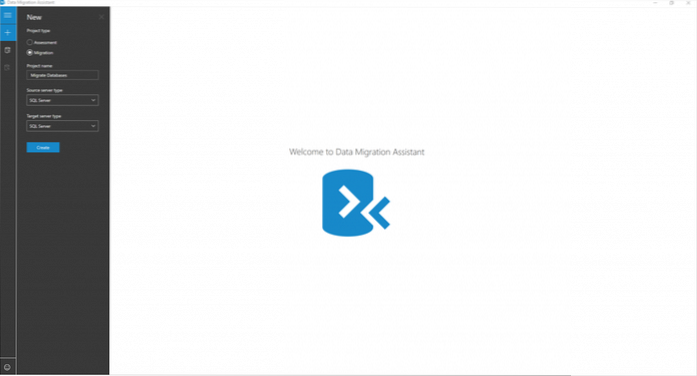
The Data Migration Assistant (DMA) helps you upgrade to a modern data platform by detecting compatibility issues that can impact database functionality in your new version of SQL Server or Azure SQL Database.
What is data migration in SQL?
What is database migration in SQL Server? Migrating data in SQL is done for different reasons. The process, data is being moved to the different instances of SQL and restoring databases from a backup, to name a few. There are two ways of moving data in the SQL server – manual and command line.
What is data migration tool?
Data migration tools are used for moving data from one storage system to another. They do this through a process of selecting, preparing, extracting, and transforming data to ensure that its form is compatible with its new storage location.
What are 4 types of migration?
There are four major forms of migration: invasion, conquest, colonization and emigration/immigration. Persons moving from their home due to forced displacement (such as a natural disaster or civil disturbance) may be described as displaced persons or, if remaining in the home country, internally-displaced persons.
How is data migration done?
Data migration is the process of moving data from one system to another. While this might seem pretty straightforward, it involves a change in storage and database or application. In the context of the extract/transform/load (ETL) process, any data migration will involve at least the transform and load steps.
How long does Windows Migration Assistant take?
Yes, Migration Assistant can take a long time depending on how the computers are connected and how much data you have. Hopefully it's all done by now, but yesterday I expect it may have taken 3–12 hours.
Where is Windows Migration Assistant?
If you've already set up your Mac, open Migration Assistant, which is in the Utilities folder of your Applications folder. On your Mac, follow the onscreen prompts until you get to the migration pane of the assistant. Select the option to transfer your information “From a Windows PC,” then click Continue.
What is SQL Server Migration Assistant?
Microsoft SQL Server Migration Assistant (SSMA) is a tool designed to automate database migration to SQL Server from Microsoft Access, DB2, MySQL, Oracle, and SAP ASE.
Is SQL an ETL tool?
Microsoft SQL Server ETL: Best Tools – Features, Pricing and More. ... Microsoft SQL Server is a product that has been used to analyze data for the last 25 years. The SQL Server ETL (Extraction, Transformation, and Loading) process is especially useful when there is no consistency in the data coming from the source systems ...
Why database migration is required?
Benefits of database migration
One of the primary reasons that companies migrate databases is to save money. Often companies will move from an on-premise database to a cloud database. This saves on infrastructure as well as the manpower and expertise needed to support it. Modernized software.
What are the three data migration tools available?
Below is a list of popular on-premise data migration tools:
- Centerprise Data Integrator.
- IBM InfoSphere.
- Informatica PowerCenter.
- Microsoft SQL.
- Oracle Data Service Integrator.
- Talend Data Integration.